Saturday, December 2, 2017

Cultural Zionism Tiyul in Tel Aviv

by Caroline McKinnon, 11th grade, NJ

Zionism is the aspiration of the Jewish people to build a Jewish democratic state in Eretz Yisrael. What does this mean? Eretz Yisrael is the Jewish homeland, and should be ruled by Jewish ideals and laws. When Jews entered Israel, they first entered Yaffo, just south of modern day Tel Aviv. They had an idea of creating a zionist land, but not the type of zionism that Herzl had talked about, known as political zionism. They wanted something that pertained to everyday life, which we now know as cultural zionism. This meant that the entire culture of the people was Jewish; the dress, morals, and most importantly, language. There were sixty families that were inspired in 1909 and left Yaffo to head north into the desert and create this dream, a dream of a Jewish state. They were carrying 2000 years of life in exile, or the galut. Instead of waiting for the messiah like others, they took matters into their own hands and changed Jewish history as we know it. I find this fascinating because they didn't do what everyone else did and wait, they were ready to live in their homeland, which is now ours. It makes you think of what we could do to help the future of Israel, just like they did.
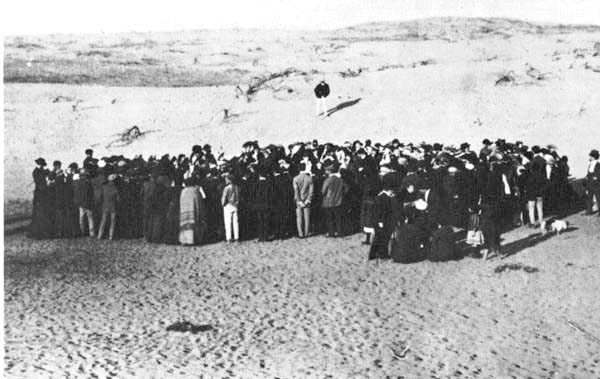
Photo of the original 60 families who founded Tel Aviv in 1909

These families were headed towards what today we call Tel Aviv. Literally, this means old and new, because it is land in our ancient homeland but the center of modern technological advancements. The families named it this not knowing that it would be such an impactful place in the future of technology, but as a nod to Herzl's book, Altneuland. This also means old and new, but in German. I love Tel Aviv because of exactly that. It is in the Jewish homeland and is such an important part of our past, but also carries the future. Israel is known as the "Startup Nation" and that is mostly because of Tel Aviv. It is the city of Jews, the past, present, and future.
IMG_5252.JPG
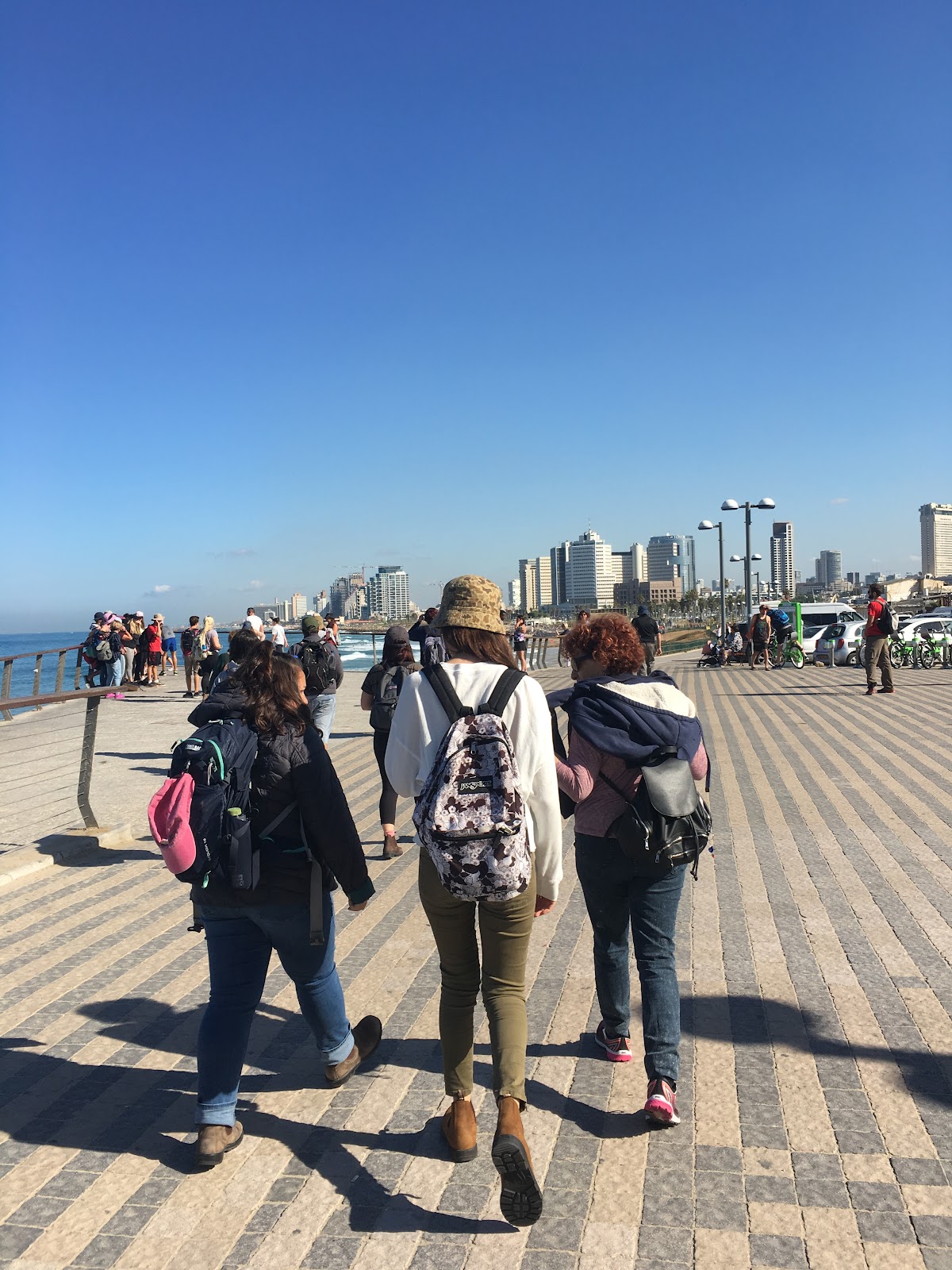
Students walking with Hebrew teacher, Sima, towards Tel Aviv

After walking around for a little bit, we went to the bus and drove to Florentin, Tel Aviv. We met up with Evan, a math teacher this semester and a Jewish History teacher in the spring semester. He also brought along his sons, Matti and Edon, and his wife Yara. We then proceeded to go on a graffiti tour of Tel Aviv, led by Matti of course. Evan helped a little bit too.

IMG_5269.JPG
Evan, Yara, and Matti leading our graffiti tour

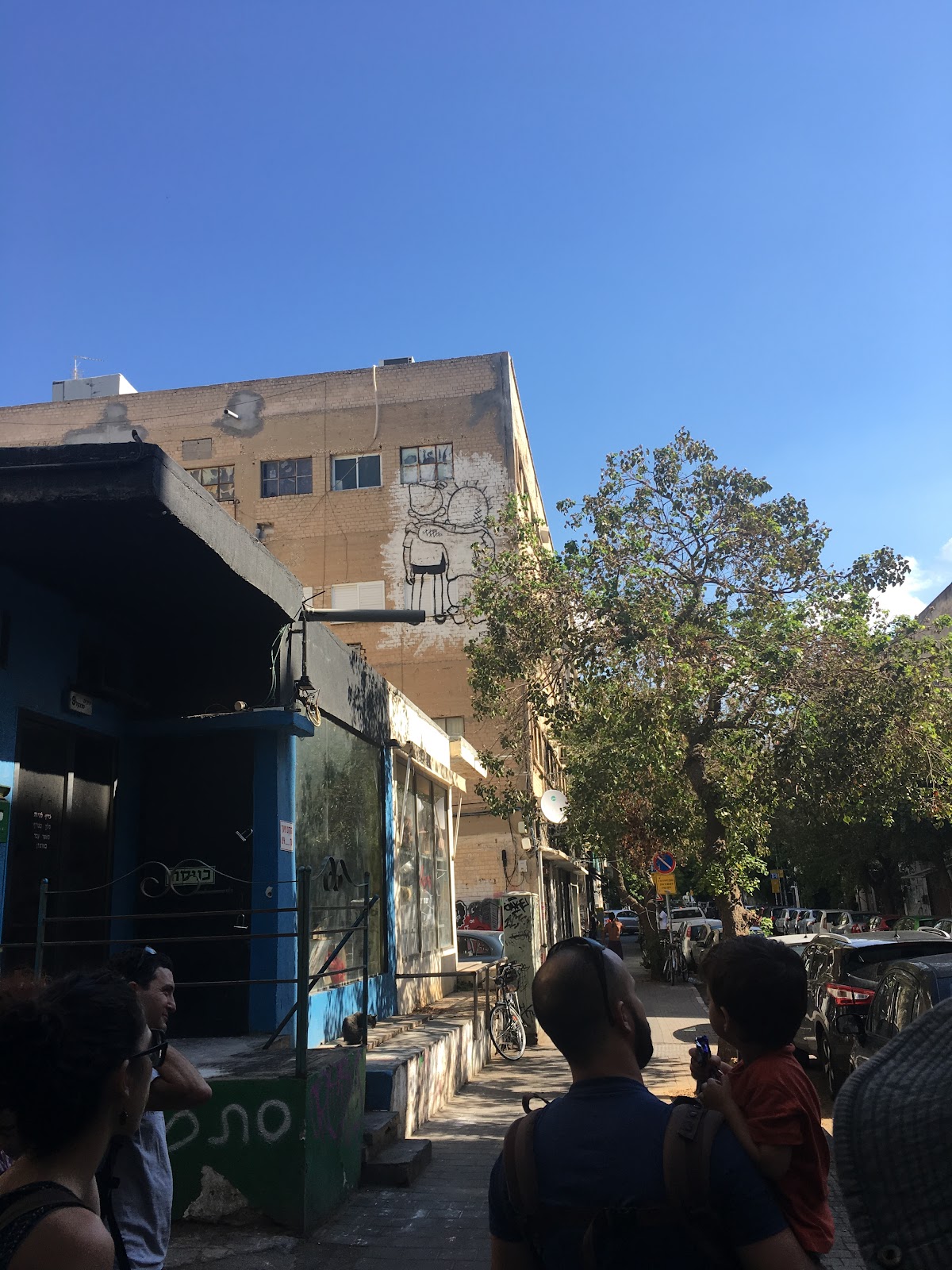
Graffiti in Tel Aviv is not so much vandalising, but rather artistic creations all over the city, Then again, with graffiti you can't have the good without the bad. It is a type of art that even masterpieces can get covered in an instant, which to me is what makes it so cool. One of the coolest things I saw today was a graffiti piece of Srulik, a famous Israeli kids cartoon character with his arms around a Palestinian refugee. It is a beautiful piece to begin with, but it has more of a personal meaning to me. I came on a ten day trip to Israel about two years ago and being the only one under 30,  I don't really remember that much. However, one of the most impactful things was seeing that exact graffiti at a kibbutz located right next to the green line. It is a symbol of peace and hope, and seeing it twice in two different places two years apart tells me that relations with Palestine and Israel aren't all about war. There truly is a hope for peace.

IMG_5315.PNGIMG_5276.JPG
Srulik with Palestinian refugee cartoon, now and then

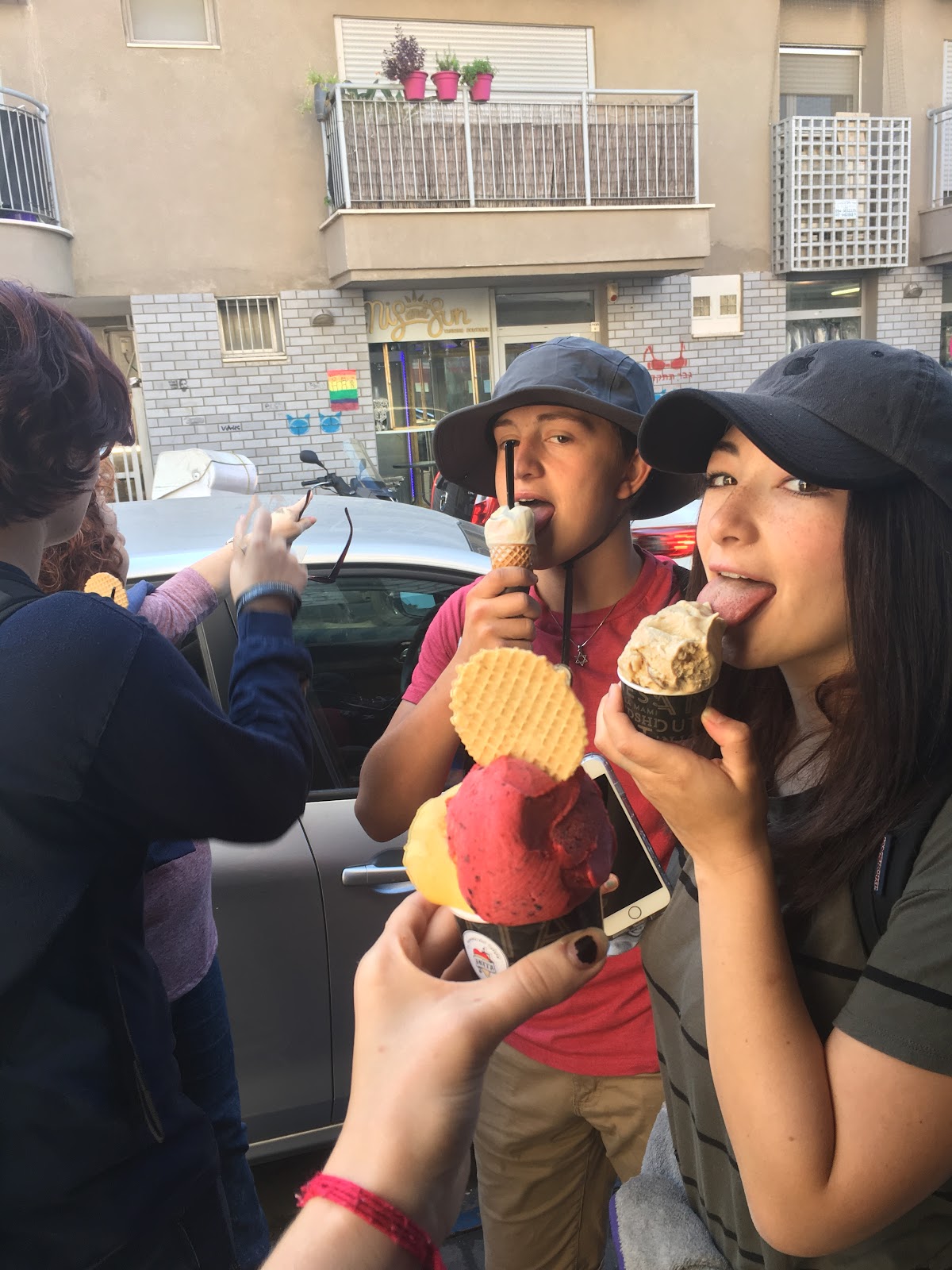
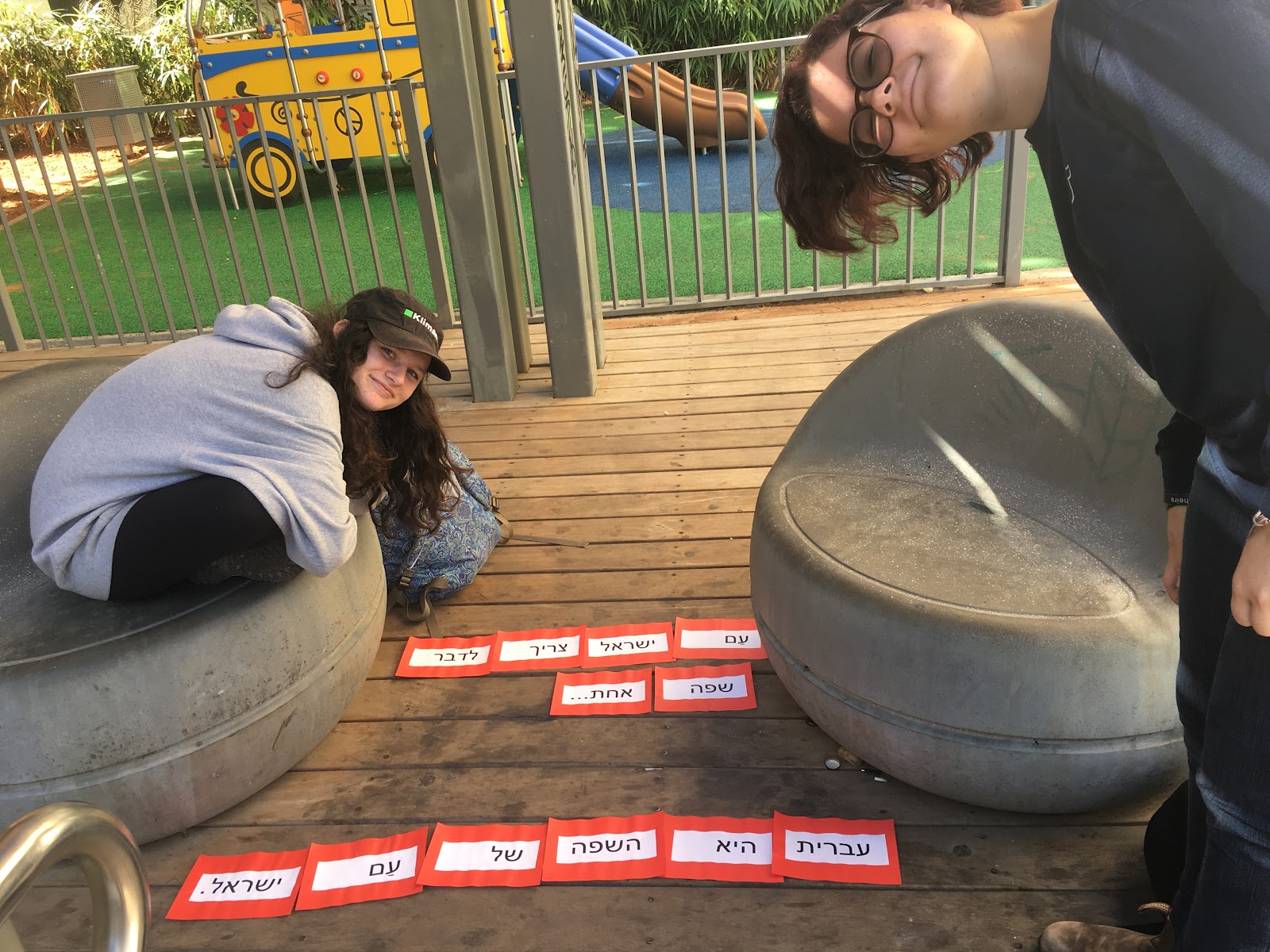
After taking a highly appreciated break at an ice cream shop, we got back into "classroom mode" and Hebrew teachers Dalia and Sima were there to teach us about the history and importance of Hebrew in a modern text. Going back to the zionists who wanted to make this land a truly Jewish place, they implemented modern day Hebrew as the language of the people. Past Jews had spoken languages like Yiddish, or even the native language if they were assimilated into the culture. In Israel, they were determined to make it purely Hebrew. They had something called the "Hebrew Police", which sounds really funny. Did they really have police to enforce the language? As crazy as it sounds, yes! If these "Hebrew Police" caught anyone speaking anything but Hebrew, they would come up to them and give them a card that translates to, "Hebrewman! Speak Hebrew!!" This was a national effort to show that the Jewish people were no longer weak in the galil, or exile, that we are a strong Jewish nation with our own language that is unique to only Israel.
IMG_5285.JPG
Students at an ice cream shop in Tel Aviv
IMG_5289.JPG
Students putting phrases together to help learn about the history of the Hebrew language

Today, we were asked whether Tel Aviv is a Jewish city or just a city of Jews. After this tiul, I have seen that Tel Aviv, and all of Israel, is truly a Jewish state. The law system, schooling, culture, food, dress, and language are Jewish. I find something incredible about that.
IMG_5312.JPG
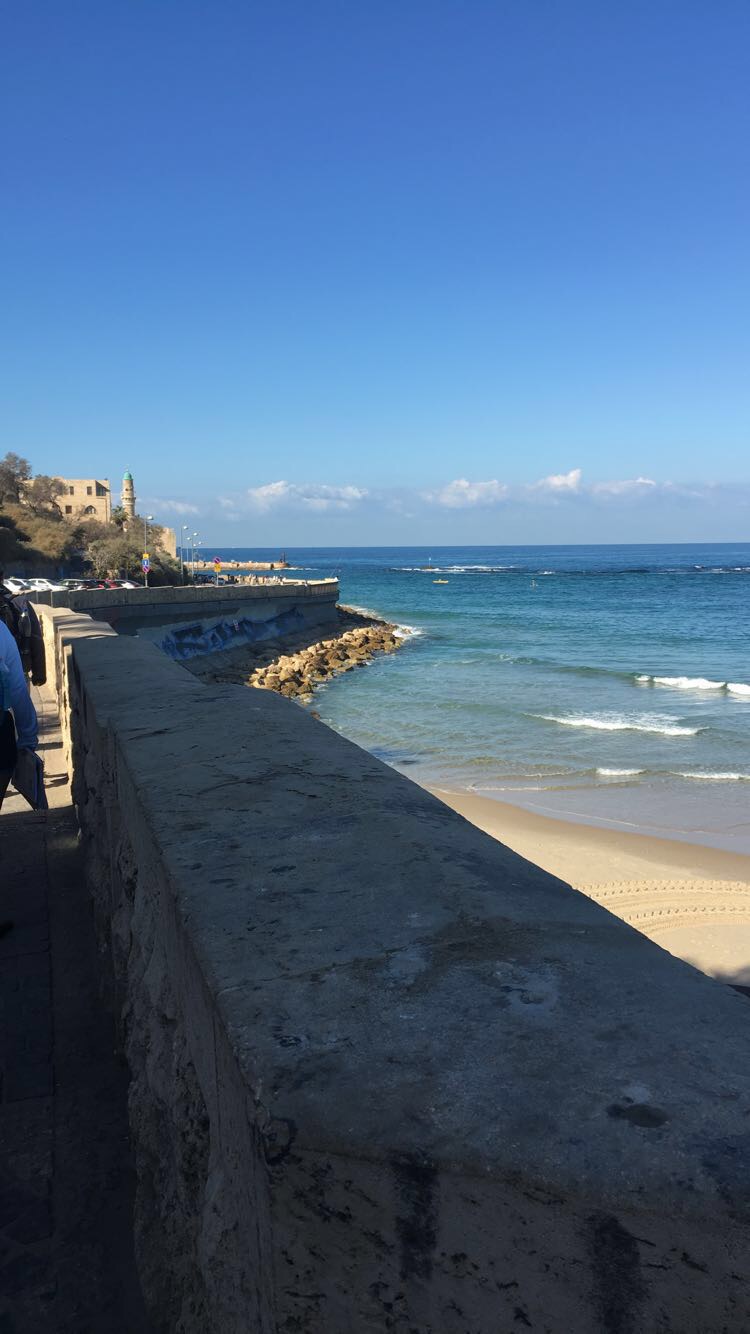
View from Yaffo overlooking the sea

Sunday, November 5, 2017

Islam Tiyul:  Visit to Ein Rafa

by Ayli Stabinsky,     11th grade,     Phoenix

Islam has faced much criticism and scrutiny based on stigma and preconceived ideas of the religion that do not apply to most of its followers.  In today’s political climate within Israel, and within Western Civilization as well, our Muslim brothers and sisters are not always treated with compassion or understanding.  I feel that the trip I embarked on with my classmates recently opened our eyes to all the misconceptions and bias, and how much more there still is for us to learn about Islam.  My goal in writing this blog is to first, share my experiences, feelings, and thoughts on the lives of Muslims in Eretz Yisrael, and second, hopefully put to rest any lingering stereotypes or negative thoughts on Islam a reader may have in their head.
The view from the village of Ein Rafa, close to our school at Kibbutz Tzuba

A look at the interior of the domed ceiling of the mosque in Ein Rafa
Islam was born in the early 7th century, and began to blossom, grow, and spread rapidly during this time.  In the year 570, Muhammed was born in Mecca, Arabia (which later becomes the most holy site in the entire Islam religion).   Muhammed was raised in the powerful Bedouin tribe, Quryash, and there he became a wealthy and successful trader.  Muhammed admired the monotheistic idea of one God in Christian and Jewish beliefs, so he attempted to bring monotheism to Bedouins.  In 610, Muhammed had his first revelation with arch-angel, Gabriel, and for the 12 years after this revelation, he preaches his ideas to the people of Mecca.  The year 620 is monumental in Islamic History and significant to the religion of Islam.  This is the year of Hijra, when Muhammed and his followers fled to Medina, this is also the first year of the Islamic Calendar.  In 630 Muhammad succeeded in uniting all the Bedouin tribes of the region, Muslims captured Mecca and tribes of Arabia vowed allegiance to Muhammed and his religion.  632 is the year of Muhammad’s death, this is also the year that sparked the schism that resulted in the creation of Sunni Islam and Shia Islam.  Muhammad’s lack of specificity on who would be his successor led to disputes.  Sunnis believe that Abu Bakr, Muhammad’s father in law, was the rightful successor of Muhammad, and that Muhammad wanted the elite members of the Muslim community to choose the Caliph.  Shias believe Muhammad would have told them only God can choose the successor, and this was only possible by keeping things in the family.  They believe that the rightful successor to Muhammad was Muhammad’s cousin, Ali Ibn Abi Talib.  The fundamental differences in these two sects’ opinions have caused centuries of conflict, battles, and discrimination between the two groups.  Today Shias and Sunnis do have differences in regard to practice, traditions, customs, and the teachings of Muhammad, but all Muslim groups consider the Quran (the holiest text in Islam, believed to be God’s word spoken to Muhammad through the angel Gabriel) to be divine and to supersede the Torah and Christian Bible. Around 80-85% of all Muslims are Sunni Muslims, however, Shias make up the majority of the Muslim population of Iran and Iraq.
My classmate Lillian getting ready to depart for our tiyul to Ein Rafa

shelf for placing your shoes at the entrance to the mosque in Ein Rafa
            Muhammad is not the only prophet in Islam, in fact, Muslims believe in some of the same prophets that are present in both Judaism and Christianity, such as Moses, Jacob, Jesus, etc.  they recognize these figures as prophets, because they preached submission.  Islam translates to “Submission to God” and Muslim translates to “One who submits to God”.  The submission to God and the acceptance of Allah as the one and only God is one of the most important pillars of Islam, and following the acknowledgement of Allah’s oneness, the belief I Muhammad’s prophethood is the principal concept of Islam.  Muhammad is the final prophet; no other messenger or miracle will be sent from God again in Islamic belief.  I cannot relate the significance of any Jewish leader or figure in our faith to the influence, importance, and essentialness of Muhammad in Islam.
Heller High students inside the Ein Rafa mosque listening to our speaker Yasmin

            Today we visited Ein Rafa, an Arab village near Jerusalem.  We had the opportunity to walk around there, look at their homes, and to experience entering their Mosque.  When entering the Mosque, the women must be covered down to their wrists and ankles, we also had to wear a head scarf to cover our hair and neck.  We all removed our shoes to make our way to the top floor (which is where their prayer takes place).  Even though we weren’t attending a prayer service, our male classmates sat in the front and the girls all sat in the back, because of the Muslim custom.  This frustrated me, because I felt as if the boys had more of a right to be there or that our learning was not as important.  Coming from my reform background, it felt odd having to sit separated from the boys, but it was interesting and relevant comparing the segregation in the Mosque to that of Orthodox Synagogues, or The Western Wall.  The inside of the Mosque was very plain in decoration.  There were no chairs inside, because during Muslim ritual prayer it is tradition to bow all the way down to the floor for Allah (as a physical sign of submission).  Much like the Jews, Jerusalem is a holy city for Muslims. 

Heller High students dressed appropriately for entering a mosque
The 3 most holy places in Islam are: Mecca, (where every Muslim must make a pilgrimage to within their lifetime, if they have the monetary, and physical means to do so) Medina, and Jerusalem.  Jerusalem is considered a sacred site for in Islamic tradition, because previous prophets are associated with the city, and because Jerusalem is where the Dome of the Rock is located.   The Dome of the Rock is an Islamic shrine built on the Temple Mount on Mount Moriah, this is the place in which the binding of Ishmael occurred (in Judaism it is the binding of Isaac), this is also where it is believed Muhammad led other prophets in prayer. He then ascended to the heavens, speaking to God afterwards. The remembrance of this journey is one of the most significant events in the Islamic calendar, and this location is one of the most significant locations in Islam.
our guide Musa explained that this is a newer and larger house built in the village  
            In my opinion, the most worthwhile moment of this tiyul was being welcomed into Yasmin’s home for a home cooked, Arab lunch, and asking her various questions relating to Islam.  Yasmin was raised in a completely secular household in England and her parents had no religious ideologies to teach or pass down to her.  Yasmin traveled to Jerusalem while studying for her degree; this pivotal moment in Yasmin’s life sparked her religious journey.  Yasmin explored all sects of Judaism, Christianity, and Islam during the early time she spent here in Israel.  Yasmin went to an Ulpan and began to pick up Hebrew.  She returned to England, thinking she would carry on with her previous, nonreligious lifestyle.  The three years Yasmin spent in England after her peregrination in Jerusalem, were the years she realized the connection she felt to Islam, and the years she spent learning Arabic.  Yasmin converted to Islam, moved back to Jerusalem, and eventually married her husband, whom she had met while working in Jerusalem during her initial trip.  Yasmin has resided in Israel for about 15 years.  She and her husband were gracious enough to give us a tour of Ein Rafa and prepare a traditional meal for us.  Asking Yasmin questions was helpful and offered us first hand insight into the life of Muslims.

“DO YOU BELIEVE THAT YOU CAN BE MUSLIM BUT NOT BELIEVE IN GOD?”

 “No. because the fundamental belief in islam is the belief in one god, and one god alone. That’s the fundamentals of it. So if you deny the belief in god, then you deny everything.”

This ideology was foreign to me.  Judaism is a religion that has a very strong cultural aspect.  I know many Jews that identify as “Cultural Jews” or people that do not believe in God, but still identify as Jewish.  Even some rabbis question the belief in God at times.  This concept that Yasmin explained is simply not a belief we share, because I believe an individual can be Atheist, but still be a Jew.

“As a Muslim woman do you wish you had more rights within the religion?”

“well, I as a woman believe I should have more rights in this world.”

My classmates and I started laughing and snapping in agreement with her witty comment.  As part of her answer she gave us an example of how Islam is a feminist religion.  She told the story of the prophet Muhammad’s wife, Hadija. Yasmin said:

“Hadija is just a brilliant example for all of us women of someone who stood up for her rights, had control of her life, had influence, and didn’t take into account what other people thought she needed to do in order to be right”
I had never heard anyone speak of Islam as a feminist religion, and I certainly was not expecting a woman that is immersed in Muslim culture and society to feel as if she had rights in the religion.  perhaps I thought this way because of how Muslim women are presented in media and Western bias.

“I believe that any Muslim woman that really knows what Hijab means would choose to wear it”

“Is there meaning behind the Hijab or headcover?”

“The hijab is to kind of put a veil. It is not about cutting yourself out of society, which is how it is often interpreted. It’s actually covering yourself in order to take part in society as a woman. We actually have a hijab to cover up men as well, but a hijab for men is less physically visible.  For instance, they don’t wear a head scarf, but a Muslim man who is religious doesn’t look at a woman.  The instruction for a man is to ignore it with eye contact, and then look at the floor when talking to a woman, not many Muslim men do that, but it is the instruction for them.  The reason that we cover up more of our physical bodies is because we are the more attractive sex, but it is also very much connected to your spiritual situation, your commitment to your religion.  It is a direct instruction from God so lots of women wear Hijab… There is also this whole idea of modesty, which is very much similar to Judaism, why women cover up. And then there is this whole thing to do with: how do you stand up to a very male dominated world 1400 years ago where all decisions are made without any consultation to women, women are viewed as objects by itself, and baby girls are being buried alive because the people would much rather have sons. How do you bring women into the public sphere? Actually covering them up made life a lot more safe for them, because they were sexually harassed all the time, and that still happens in many Muslim countries today, it also happens in America today.  The thing with Hijab is, it’s supposed to be empowering to women, not supposed to be something to make them feel submissive”

I did not have any knowledge or background on the historical reasons that Muslim women wear Hijabs prior to this tiyul.  It is incredible that Yasmin has found empowerment and strength through wearing her Hijab, but after hearing her explanation, I felt it contradicted her belief that Islam is a feminist religion.  The fact that men are instructed to look at the ground when interacting with women is ridiculous to me, and the fact that women still wear Hijabs to prevent sexual assault is saddening.  If Reform Judaism preached ideas supporting or adding to rape culture, or that men should never lay eyes on women, I would never connect to Judaism and would resist that ideology.  However, if the Muslim women that dress in Hijab have no problems wearing them and feel safe, strong, and powerful in their headscarves, I support their choice to wear them 100%.

Yasmin shared the reasons she converted to Islam, and the negativity she faced after her decision. Many people close to Yasmin did not understand or appreciate the idea of her conversion.  Many people have ignorant views of Islam based on what is depicted and portrayed on the news and media.  
An important piece of advice Yasmin shared with the URJ Heller High (formerly NFTY-EIE) community is as follows:

“Don’t look to Muslims to understand Islam, because the actions of many Muslims are not that Islamic.  They may be Muslim by birth and not practice, or they may have been taught Islam in a wrong way that may be more cultural than religion.  if you want to really understand Islam, go to the source of Islam, which would be in the Quran, the Sunna, or the Hadid. Once you know from that source what Islam is about, you are in a much more informed position to judge how the media portrays Islam, and it will be much more easy to understand how most Muslims reject the terrorist or extremist versions.”
With this information, I feel I can now be an advocate for just treatment of Muslims, and debunk any falsehoods or stereotypes someone may bring up.  This tiyul was remarkable.  I learned an incredible amount in such a short period of time.  I learned about parts of Islam that I find really rad, and was also able to form educated opinions on some aspects I do not agree with in Islam tradition.  Jerusalem is such a beautiful, magical, spiritual, and significant place to so many diverse peoples and religions.  I am so very lucky and grateful to have the opportunity to live here; being so close to holy sites for so many different religions and cultures allows me to learn and experience the beauty in diversity first hand.

we were served majadara for lunch, a yummy traditional dish of rice, lentils, and spices


Sunday, October 22, 2017

Yam L’Yam   (sea to sea)

by Jacob Gencher,     grade 11,      Ontario
 
Heller High students hiking up Mount Meiron during the Yam L'Yam hike
A nice, relaxing, stress-free Sukkot with a kind and accepting host families abruptly halts and we are plunged into a harsh, tiring and rigorous reality that is the Yam L’Yam trip. Yam L’Yam is a 5 day trip that enriches the students’ perception of the land of Israel and the significance of it, with an experience that will never be forgotten.
                Starting at the Sea of Galilee, we embarked on our hike in a very enjoyable and unique way. A short hike through a beautiful stream, shrouded in greenery that formed a canopy protecting us from the glaring sun, was one of the most loved parts of the entire trip. This water adventure was filled with laughter, joy and smiles stretching from ear to ear. To mark the beginning of our adventure, we filled a bottle with water from the stream to be couriered to the Mediterranean Sea. After our time at the stream, we boarded the bus and headed to our first campsite. After a little bit of relaxing and arranging our tents, dinner was ready for us. After dinner, we played games, bonded and marveled at the beauty of the starry sky.

                The second day was full of excitement. After waking up fearing the worst, as my backpack was missing, I was relieved and quite happy to find m y backpack was not stolen, but rather dragged by wolves up a cliff behind my tent. The day started out with a “Broga” Tefilla, hosted by Dani and Michael. It was an excellent way of incorporating the goal of Yam L’Yam, connecting to the land of Israel, with prayer. We started our hike at an old police station that was used while the British had control over Israel, which I thought was very interesting. Having been a Shabbat, this hike was not very long and was only to get a feel for the type of landscape we would trek in the upcoming days and get a little taste of the spectacular views we would experience. We returned after the hike and were divided into three groups. Each group would be responsible for cooking their own breakfasts and lunches. After being divided, we entered a competition; utilizing the skills of fire building we had just been taught.  The most important part of the day was celebrating two students’ birthdays, Noya and Lillian, by a camp fire. We played games, danced and had a great time.
It's all sunny in this photo, but the rain came later!

                The third day was the most exhausting of the trip. We started the day returning to the old police station and beginning another hike. After about an hour of hiking we stopped, split into our groups and made our breakfast. It wasn’t the most exquisite meal, but the porridge, tea and biscuits were bland, but not the worst. After breakfast we packed up and headed toward our main objective, Mt. Meiron. The hike was extremely interesting. We walked through a very out of place tunnel, witnessed extremely beautiful views and did some serious rock climbing. After climbing up a very steep incline covered in rocks and scaling rock walls for a couple hours, we stopped for lunch. Lunch was much more flavourful than breakfast; rice, sandwiches and salami really made for a delicious meal. After lunch we were taught a bit about navigation and how to use a map. We then headed into a small village. While in the village, it started to drizzle, which was not particularly bad and it helped spice things up. After exiting the village, we walked for what seemed like an eternity until finally, we reached the peak of Mt. Meiron. The view was spectacular! Looking out over the horizon made me feel like I could accomplish anything. What made the view truly amazing is that we were shown our starting point and the old police station in the distance.
The remains of an old British police station was on our trail during the hike.
               Climbing Mt. Meiron I feel is a metaphor for life, in that, the path to your objective may be full of obstacles, and things will weigh you down (in this case it was a backpack with four liters of water, a bowl, spoon, cup, cooking materials and leftover food), but if you persevere and reach your goal, when you look back, you will feel accomplished and realize that the journey was worth it. After a short talk about Mt. Meiron and the significance of it, we unfortunately had to take a break from hiking and took a bus back to our original campsite, instead of hiking to the next one, because of weather issues. We arrived at the campsite, set up tents, ate dinner and had an activity that revolved around loneliness and silence. It was a break from the daily schedule and was a time of reflection. After sitting alone on a trail for about twenty minutes, we sat in a circle and talked about fears and anxiety. It was a very nice activity that helped me connect more to Israel and to myself.
                The fourth day was a bit of a disaster at the beginning, but turned around later in the day. I woke up full of excitement and ready to start a new day, but my excitement quickly diminished as it started to rain. Panic spread throughout the campsite. People ran to get raincoats, to put their suitcases in the tent or under a tarp and the group’s morale instantly dropped. The rain started to pick up more and more and it seemed like we were doomed, until our hero, Yonatan, grabbed his speaker, turned on some Israeli music and started dancing in the rain. Others soon joined him and this disastrous rain turned into a fun activity. After the rain had died down, we headed onto another bus a returned to the base of Mt. Meiron. We were divided into our groups and given maps for the activity that was planned. This activity was denied by another wave of rain. We all huddled under a canopy made of one very large stone, soaking and shivering, and waited for the rain to pass. In this state of despair came one of the best moments of the entire trip. We all gathered in a circle and started to sing the Wii theme song. Childish, sure, but it was surprisingly amusing and boosted the spirits of the group. The rain was relentless and eventually a bus was called to pick us up. While waiting for the bus we played freeze tag, which was a lot of fun and made me forget all about the rain ruining the day. The bus finally arrived and we boarded it. The bus took us to our next hiking location. Before beginning the hike we had lunch and had a cooking competition. After we had finished lunch with revived spirits, we revisited our night program and walked alone. I was skeptical at first, but I am glad I walked alone, for it helped me appreciate the view of the mountains and gave me another chance to exclude myself from the group I have become so attached to. After we met up and walked a little bit more as a group, we arrived at our new campsite. We set up our tents, ate dinner, had a small campfire and went to sleep.

                The fifth day was, in my opinion, the best of the trip. We woke up, packed all of our things, returned our cooking supplies and sleeping bags and prepared for the bike ride. A truck hauling thirty or forty bikes arrived at our campsite. After a brief talk about safety and rules, we were each given a bike and just like that, we were off. Taking it slow, we descended our first hill. It was amazing. The wind blowing in your face, the pleasant aroma surrounding you and feeling like you’re flying. The bike ride was the most enjoyable activity I have participated in on the entire trip of NFTY Heller High. It was unbelievably fun. Riding on trails, roads, through villages and through a banana plantation made the bike ride’s scenery more interesting than the past four days’. After biking for multiple hours, we finally arrived at our destination: the Mediterranean Sea. Everyone wasted no time heading into the beautiful complex that overlooked the Sea. Relieved that we had finished, we sat in a circle and talked about our favourite part and the most difficult part of the trip. It was very interesting, seeing everyone’s enjoyment come from different places of the trip, but what was more interesting was that some people, myself included, had trouble finding something they didn’t like about the trip. After, we looked at a map and traced our path. It was truly remarkable to think that we walked all of that distance, and with relative ease. When the talk was over, we all rushed to the washroom to get changed and headed down to the beach to swim. We all headed down to the beach and, before swimming, dumped the water from the Galilee into the Sea. We then ran into the Sea with joy. After a couple hours of swimming we were pulled out and ate lunch. After lunch we went back to the Sea for a few more hours and we all had a great time. After five days of mud, dirt and sweat, a nice swim was exactly what we needed.

                Yam L’Yam is a trip that I will never forget, and for good reasons. After experiencing the trails, the views, the good (and the bad) weather, and an overall sense of belonging makes it easy to understand why it would be the national pastime. It gives you a better appreciation of the country you are living in or visiting. On a program like NFTY Heller High, where the main goal is to give the students a better perception of Eretz Yisrael, a trip like Yam L’Yam is the best way of presenting and enforcing the importance of the country. Jewish History class sometimes makes me wonder about the relevance of what we learn, but this trip has helped me realize, by a first-hand experience, that everything that happened in the history of the Jews had always revolved around the country of Israel, and now I understand how important that is.


Friday, October 20, 2017

Oral Law Tiyul:   Beit Sha'arim & Beit Alpha

by Gabriel Cohen,      11th grade,        Massachusetts

An elaborate sarcophagus depicting a geometric design and an animal at Beit Shaa'rim

            For this trip we went to the location of the ancient town of Beit Sha’arim, one of the towns the Sanhedrin moved to. After Bar Kochva revolt was put down by the Romans, the southern portion of Eretz Yisrael was economically devastated, and, as we’ve been told before, if there is no prosperity, there can be no Torah study (Im Ein Kemach, Ein Torah). Beit Sha’arim, at the time, was the most prosperous place in Israel. It became such a center of wealth because it was the location where farmers would come to have their grain weighed and priced. This made it the perfect place for the Sanhedrin to continue their study and development of Oral Law.
one of my Kitat Nahal classmates is surprised to see a graven image on a sarcophagus!

            During this time, rabbis known as Tanaim were given long stretches of the Oral Law to memorize and pass down to the next generation. However, as the Romans started to make life more difficult for the Jews, the rabbis of the Sanhedrin were worried about losing the life a Tanaim and the oral law that he knew. As a solution, Rabbi Yehuda HaNasi, the leader of the Sanhedrin declared that the Oral Law was to be written down and codified in the Mishna. He had three reasons for his choice: 1) It would preserve the knowledge the law held, 2) The law could not be manipulated to any degree, and 3) There would be another thing that makes us Jewish. This idea clearly worked out since we still use the Mishna and the Talmud today.
entrance to the 2nd century burial caves of the rabbis of the Sanhedrin at Beit Sha'arim

            While we were learning all of this, we got to walk inside the burial caves of the members of the Sanhedrin and their families. There, we got to see some of the decorations on the sarcophagi of these rich families. We also found something quite disturbing: animals depicted on the sides of the tombs. It’s a little questionable on whether or not this is Avodah Zarah, but I'll let it slide. Then, we see the Greek goddess of victory, Nike. That’s definitely worship of false gods, right. Oh, but it gets worse! Next, we go to a synagogue at Beit Alpha with an entire mosaic floor with human images and the Greek sun god, Helios, right in the middle. How could anyone allow this to happen? What would the rabbis say?
Is this avoda zara (idolatry)?  The zodia wheel and the sun god Helios appear in this synagogue?

            Well, actually there’s a story in the Talmud that actually justifies this. Rabban Gamaliel is in the bath house, a place where one would not normally see a Jew. Proclos, son of a plosphos, clearly thinking the same thing, asked him why he was in the bath house of Aphrodite. Rabban Gamliel's response was that since the goddess was not used as an idol, it was okay for him to be in there. This is actually similar to one of the dilemmas that we as Jews have today of dealing with Christmas culture. As long as it’s not religious, it’s okay.
            In conclusion, this tiyul was a fascinating look on the origins of one of our most important law texts in our belief system. It also shows how the rabbis justified some of the more questionable choices made by Jews during this time period. All in all, another amazing trip.

Heller High students discover a giant menorah carved into the cave wall at Beit Sha'arim


Chirstianity Tiyul in Ein Kerem

by Sammi Reyes,   11th grade,    New York

Christianity is currently the leading religion on the Earth yet not the oldest religion to exist.  Surprisingly, Christianity started as a sect of Judaism and it was told to new followers back then that this would be an easier Judaism.  On October 2nd, we went to Ein Kerem, a holy Christian neighborhood right next to Jerusalem, to learn all about the origins of Christianity.

Mary's Spring in Jerusalem's Ein Kerem neighborhood
As we learned about Paul, his vision, and how he spread Christianity to make it what it is today, my question that has been for years, was clearly being answered.  As a biased Jew, I had always wondered why Judaism is not the leading religion in the world if it is the first monotheistic religion, so to speak.  Although Jesus was a practicing Jew as his real name was Rabbi Yehoshua and Paul, for the longest time had been against the early Christians. One day, Paul had a vision of Jesus on the crucifix and ultimately agreed with the other Christians and began to convert to create a following. 

Church of the Visitation in Jerusalem's Ein Kerem neighborhood


Despite all this, Ein Kerem does have significance.  Ein Kerem is claimed to be the place, while trekking back to Bethlehem and pregnant with Jesus, Mary stopped and met up with her sister where she was told that she was carrying son of God.  We visited the church in which was created on the site of the meet up and we were able to see the prayer of fertility in about 50+ languages as well as a sculpture of the two sisters meeting.
  
When Paul committed to spreading the new sect, the sect of Jesus, he displayed Judaism as difficult and told people that would Christianity would be easier.  He did this because he saw it was hard to convert Jews because they believed that he was claiming Jesus as the Messiah and the Jews did not believe him.  They were skeptical because they knew that claiming a false Messiah has lead to bad things in the past.  He described that the people would make a new covenant with God and that they would worship Jesus.  He tells the people that Judaism is withering away and that Christianity would be the center and new religion. 

Entance to St. John Ba Harim Church in Ein Kerem
The Christians, later in history, would use the crucifixion of Jesus as an anti-Semitic note and blame the Jews for his death.  During that time in the Middle Ages, there were tensions between the Jews and Christians but since then, they have “leveled out”, per say, and we can tolerate each other ideals and values.

Sunday, October 15, 2017

Masada

by Noya Shenhav,      12th grade   from Israel

At 4:15 in the morning, the students of Heller High, formally NFTY-EIE, started their day. We grabbed our bagged lunches and listened to announcements. Our tiyul began in the dark at the bottom of Masada. At the bottom we prepared ourselves for the challenging hike we were about to have. Before starting we all huddled into a close knit circle and sang a song for morale, after this we were ready to go.


The hike up Masada for me was challenging but not the hardest thing ever. The hike started off amazing because it was still dark and nice outside and you could see all the stars and the moon. I found it so relaxing to walk and then look over your shoulder and just see the whole sky lit up by millions of stars, I personally prefer stars and moon over the sun and clouds. I was able to be one of the first 10 to make it up to the top. The entire way to the top I was singing “Make a Man Out of You” from the Disney movie Mulan, that gave me all the motivation I need.

Once I made it to the top of Masada I took out my bottle and hydrated because if you don't hydrate then you “die-drate”. The feeling of accomplishment rushed through me. While waiting for the rest of my classmates to make it to the top I went to the edge to find me a spot to watch the sunrise, slowly more and more classmates joined me, we sat together making jokes, taking pictures, and watching the sun wake up. When we look down we are able to see our starting point and the journey we've made. After watching the beautiful sunrise, we had a wonderful Tifillah service led by Sammi and Kate, after that we split into our two classes and got down to work.


When you translate the word Masada from Hebrew to English it translate to “fortress”. This makes a lot of sense because it is high up on a plateau which makes it safe from danger, in addition to that you can keep an eye out on the world around it.

During this time there was a king named king Herod and he had a goal that everyone on Masada could live on the top for ten years without coming down for supplies, how crazy is that! In order for this to actually work he had to make a few necessary modifications. He started by digging trenches from Mt. Hevron to Masada so that there would be a reliable water source. After that he added twenty-nine storage units to hold items such as dried fruits and weapons. The last thing he did wasn't exactly a necessary modification, he constructed his palace. He placed his palace facing north in order to get a cool breeze. There were three main layers to King Herod's palace. At the bottom of his palace he had a guest room that had its own bath house. Going up to the next layer, the second layer, its purpose was to have a place where Herod could entertain his guest, most of them being or Roman or Jewish. Finally we have the top layer, this layer was where King Herod slept, the actual palace.


At the end of the great revolt, the Zealots from Jerusalem (the warrior-rebel sect) fled to Masada. They were able to do this by climbing up the side of the mountain, vowing that if they fell they would do so quietly. They picked Masada because they knew that it was a place where they could sustain life for a long period of time.

In order to make Masada feel more like home after the Zealots conquered it, they had to add a few things. They started by adding mikvehs, the main reason for it wasn't for praying at the temple, but for the women to bathe in after their menstrual cycle, since it is considered an interaction with death. The purpose of this was so that the Jewish people could reproduce. Besides the mikveh, they also added synagogues. The synagogues were made so that the Jewish people could sit facing each other, making it feel more like a community. They already had bath houses, so they didn't need to build those, but they did go and make sure that all the art in them were kosher (which they were) and that there weren't any figures on them. The purpose of all of this was so they could make sure they sustain and Jewish life and keep Judaism alive. Within this comes the vision of the dry bones. The prophet Ezekiel’s vision of dried bones is how the Jewish people will rise up again from their ashes, and God will breathe air back into them.


Eventually, the Romans got their revenge. They surrounded Masada and built a ramp in order to siege the top, but when they finally got to the top they were meet with all 960 inhabitants of Masada dead, according to Josephus Flavius. Even though it is very difficult to try to understand their actions many people inferred why they did what they did. One of the reason people have inferred was that they killed themselves because they didn't want to become slaves as they were in Egypt. At the time, the Rabbis didn't recognize the fall of Masada. All though we do not know for sure why the rabbis do not recognize it, there are a few inferences. Their were people that said that the rabbis didn't approve of what the Zealots did because it was going against the ten commandments. Other people said that it was because they didn't want to say something so terrible about Masada. The last reasoning behind this is that they didn't want to disrespect anyone, but we cant know for sure because these are all speculations.


Today we often vow to “not let Masada fall again.” When we say this it is like saying that the Jewish people will fight through thick and thin in order to preserve our land and our religion. To me, Masada represents Israel and when we say this it means that we won’t let anyone come and take it from us again.